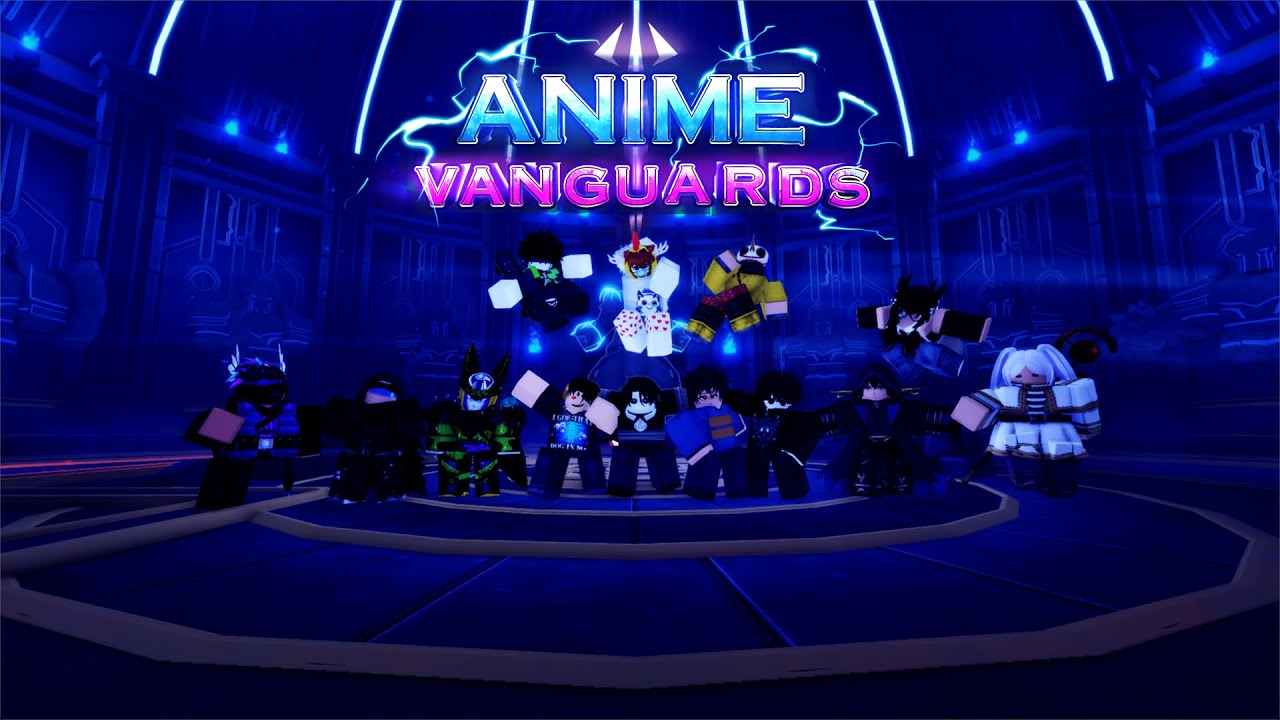
Anime Vanguards Guide: Mastering Units and Best Strategies
Discover the best strategies for Anime Vanguards. Learn how to maximize your units, optimize your team, and dominate the latest game updates today.
Published:
Table of Contents
Anime Vanguards has taken the Roblox tower defense scene by storm, challenging players to balance complex unit synergies with high-stakes resource management. Whether you are a veteran looking to optimize your late-game builds or a newcomer trying to understand the meta, mastering the core mechanics of Anime Vanguards is the key to conquering the toughest dungeons.
This guide breaks down the most effective ways to utilize your units, manage your gold, and prepare for the latest challenges. By understanding the underlying math of damage scaling and familiar interactions, you can elevate your performance significantly.
Understanding Unit Synergy and Meta Shifts
In Anime Vanguards, the difference between a successful run and a failed wave often comes down to timing your unit placements. High-tier units like Monarch Kenpachi or Evolved Emilia require specific setups to reach their full potential. According to recent community reports, the current meta heavily favors units that can self-sustain or benefit from specific Familiar buffs.
When building your team, you shouldn't just look at raw damage numbers. Instead, consider the "investment-to-output" ratio. Some units, like Kenpachi, are relatively weak during the early game but become absolute powerhouses once they hit specific upgrade milestones.
Key Unit Performance Factors
Factor
Importance
Why it matters
Placement Cost
High
Dictates how early you can establish a defense.
Buff Scaling
Critical
Determines late-game viability against bosses.
AOE Range
Medium
Essential for maintaining wave control.
Familiar Synergy
High
Provides unique passive bonuses that boost stats.
Maximizing Your Damage Output: The Kenpachi Example
Community discussions frequently highlight Monarch Kenpachi as a top-tier choice for players willing to invest in deep grinding. A fully maxed-out Kenpachi, especially when equipped with the right Familiar, can reach staggering DPS numbers. However, the path to greatness is paved with heavy resource consumption.
Optimizing Kenpachi
To get the most out of your units, ensure you have buffers like Odihee placed before deploying your main carry. This ensures your primary damage dealer benefits from stat increases from the very first wave.
The common mistake many players make is trying to max out a unit too early without adequate support. By waiting to deploy your carry until you have at least one or two support units on the field, you save gold and prevent leaks during the initial waves.
The Power of Evolved Units and Familiar Systems
The introduction of the Familiar system has fundamentally changed how we approach team building in Anime Vanguards. Familiars are not just cosmetic; they provide critical stat boosts and passive effects that can turn a mediocre unit into an S-tier contender.
For example, Evolved Emilia thrives when paired with units that provide freeze effects, such as Fuki. This combination allows her to maximize her critical damage output. Below is a breakdown of how to prioritize your evolution resources:
Evolution Resource Priority
Snowflake Drops: Essential for high-tier ice-type evolutions.
Memoria Shards: Used for unlocking secondary passive slots.
Gold Reserves: Always keep a buffer of 500k+ gold for sudden upgrades.
Unit-Specific Mats: Farm these only after confirming your primary team structure.
Strategic Wave Control and Buffing Stations
Effective wave control is about more than just placing units; it is about creating "buffing stations." By grouping your support units (like Odihee or Subaru) in a compact area with infinite range, you can keep your damage dealers buffed without sacrificing valuable space on the map.
Players often report that the biggest bottleneck in late-game stages is the lack of crowd control. Even the highest DPS unit will struggle if enemies are constantly leaking past your front line. Incorporating at least one dedicated slow-effect unit is non-negotiable for higher-difficulty levels.
Recommended Support Unit Roles
Unit Type
Role
Benefit
Buffer
Damage Multiplier
Increases base attack stats.
Debuffer
Speed Reduction
Slows enemies, extending exposure time.
Cleanser
Status Removal
Removes self-stun debuffs from carries.
Staying Updated with the Community
Anime Vanguards is a rapidly evolving game. Developers frequently release updates that shift the meta, making once-powerful units obsolete and bringing others into the spotlight. To stay ahead, it is recommended to keep a close eye on the Official Anime Vanguards Wiki for the latest patch notes and unit changes.
Engaging with the community on platforms like Reddit or Discord is also vital. Veteran players often share "sandbox" test results that reveal hidden mechanics—such as how specific animations might delay an attack or how certain passives interact with boss modifiers.
FAQ: Common Questions About Anime Vanguards
Q: Which unit should I prioritize upgrading first?
A: Prioritize your primary carry unit that offers the best AOE damage. However, always ensure you have a baseline support unit (like a basic buffer) placed first to maximize your gold efficiency.
Q: Are Familiars worth the grind in Anime Vanguards?
A: Absolutely. Familiars provide essential stat multipliers and unique passive abilities that are often the difference between clearing a dungeon and failing. The grind may be long, but the power increase is significant.
Q: How do I handle waves that feature fast-moving enemies?
A: You need to incorporate slowing effects. Units that apply a "freeze" or "slow" debuff are crucial for controlling the pace of the game and allowing your high-damage units more time to execute their attacks.
Q: Is it better to have many low-level units or one maxed-out unit?
A: In most cases, one maxed-out carry unit supported by 2-3 dedicated buffer units is far more effective than a board full of low-level, unoptimized units. Focus your resources on a core team of 4-5 high-impact units.